Fuel is usually the single largest variable cost of running a truck, and it's also the one most carriers track the loosest — a receipt here, a rough guess there. The formula itself is simple; the value is in tracking it consistently enough to actually notice when something changes.
The actual formula
Fuel cost per mile = total fuel spend ÷ total miles driven, for the same period. To get there you need two numbers you can trust: how much you actually spent on fuel, and how many miles that fuel covered — both loaded and empty. Total miles, not just loaded miles, or the number quietly understates your real cost.
Fuel economy (miles per gallon, or liters per 100km) is a related but different number — it tells you how efficiently the truck burns fuel, not what that fuel actually cost you. You want both: economy tells you if something's mechanically off, cost per mile tells you what it's doing to your margin.
Track it per truck, and over time
A single trip's fuel cost tells you almost nothing — prices fluctuate, routes vary, weather and load weight both move the number around. What matters is the trend per truck over weeks and months. A truck whose cost per mile is climbing relative to your fleet average is telling you something: a developing mechanical issue, an alignment problem quietly increasing rolling resistance, or a driver's habits changing. You won't catch any of that from a single fill-up receipt.
What actually moves the number
- —Idling.Extended idle time burns real fuel for zero miles — it's a significant, controllable cost most operations underestimate until they actually measure it.
- —Tire pressure. Underinflated tires increase rolling resistance and burn more fuel per mile — a cheap, five-minute check with a real payoff.
- —Speed. Fuel economy drops sharply above certain speed thresholds on the highway — a small, consistent speed reduction adds up over a full month of driving.
- —Deadhead miles. Every empty mile still burns fuel with nothing to show for it — see our deadhead miles guide for how to cut those specifically.
Don't force it into a percentage
A lot of fleet software tracks fuel level as a percentage of the tank, which is what most ELD hardware reports natively — that's fine for a quick glance at how full a tank is, but it isn't the number that tells you anything about cost. What actually matters for cost-per-mile is the real gallons or liters purchased at each fill-up, tied to the odometer reading at the time, tracked consistently over time.
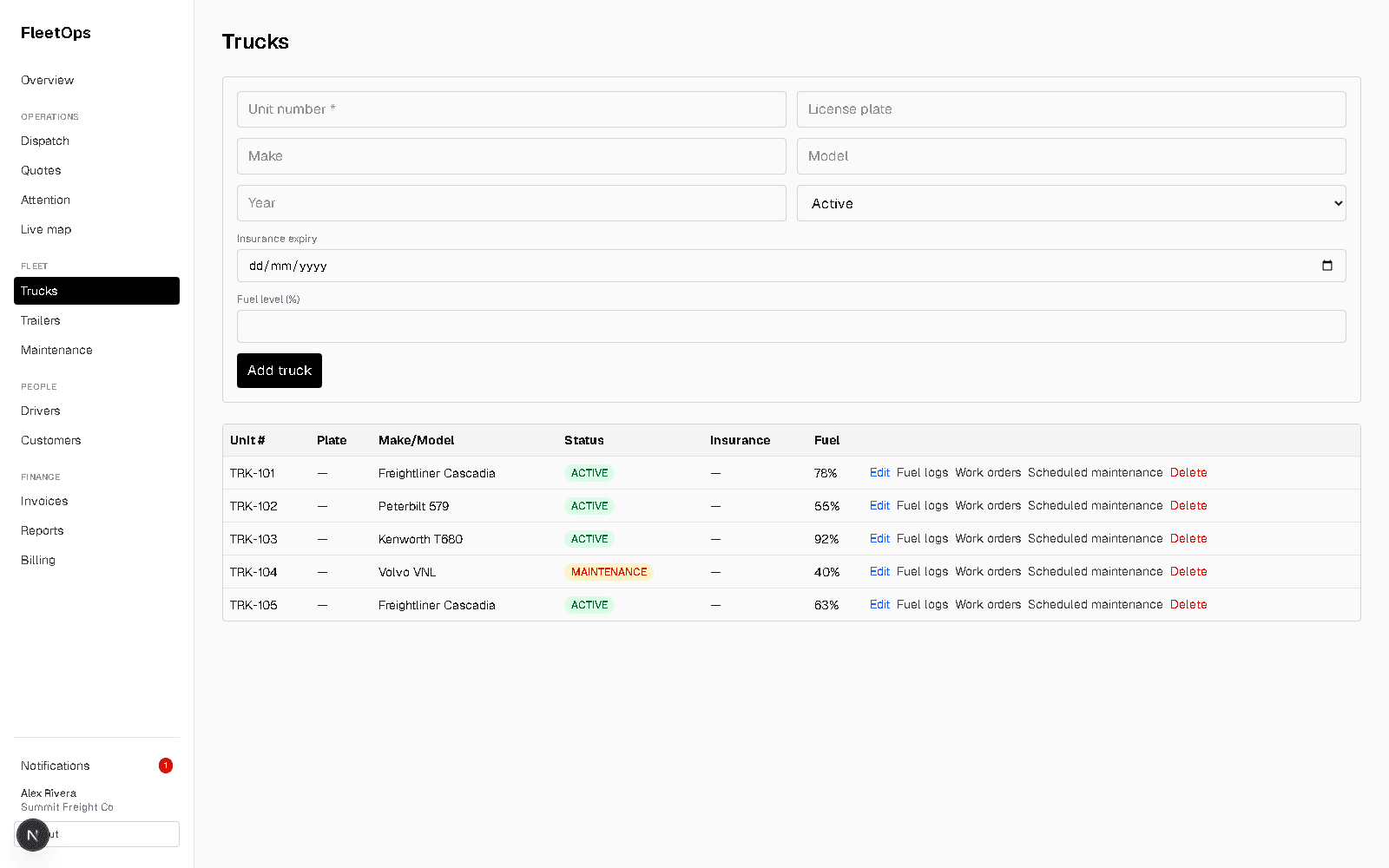
Every truck's status and fuel level in one table, with a direct link to that truck's fuel logs.
Where Haulstats fits
Every fuel log ties a real volume purchased to an odometer reading, in whichever unit — gallons or liters — matches how you already think about fuel, and rolls up automatically into fuel economy and cost-per-mile by truck in your reports. No separate spreadsheet to keep updated.